
Dry eyes can leave your eyes feeling gritty and tired, and it often gets worse as the day goes on. Plenty of people start by making a few changes at home, and that’s a sensible first step.
You can often get rid of mild dry eye relief with home remedies like warm compresses and screen breaks, but symptoms that keep coming back need professional dry eye treatment that addresses the root cause. Figuring out which one you need starts with an eye exam with a dry eye specialist and optometrist such as the doctors at Luminance Vision Optometry.
What Causes Dry Eye?
Your tears keep the front of your eye hydrated, healthy, and comfortable. Tears are made of layers of water, oil, and mucus, and when this balance is off, the tears will be unstable, evaporate quickly, leaving your eyes dry and uncomfortable.
Dry eyes can happen when your eyes don’t make enough tears or when your tears evaporate too quickly. Blocked oil glands in your eyelids are the most common cause of dry eye disease because the oily layer slows evaporation of the tears.
Prolonged screen time and/or dry air can make dry eye symptoms worse. Age, hormonal changes, windy conditions, and certain medications may also leave your eyes short on moisture.
Common Signs To Watch For
Symptoms often start small and worsen through the day or over time. Watch for any of these symptoms:
- Burning or stinging
- Grittiness, like something is stuck in your eye
- Redness
- Sensitivity to light
- Blurry vision that gets worse late in the day
- Uncomfortable contact lenses
- Tearing
It may sound odd, but watery eyes can also mean dry eyes. When your eyes are so dry that they are irritated, an automatic and reflex signal is sent for quick tears to flood the eye resulting in tearing.
Home Remedies You Can Try Today
For mild dryness, a couple of additions to your routine can help your eyes feel more comfortable..
Warm Compresses and Eyelid Cleaning
Hold a warm compress over your closed eyelids for about 10 minutes. The heat acts to melt thickened oil stuck or blocking your eyelid glands. Immediately after heating, gently massage your eyelid or roll your eyelids with an eyelid roller to unclog the glands.
Clean along your lash line daily with an eyelid brush and doctor approved eyewash that is not an irritant to your eye or the delicate eyelid skin. Ask our doctors which eyelid cleanser they recommend for you.
Screen Breaks
When looking into a screen, studies show a reduced blink rate which contributes to dry eye symptoms. Additionally, many of those blinks aren’t complete blinks and don’t fully pump good oil and spread tears across your eyes. Try the 20-20-20 rule: every 20 minutes, look at something 20 feet away for 20 seconds. Use that break to increase your blink rate and to fully blink and pump tears to moisturize the eyes.
Diet and Hydration
Drink water throughout the day, especially if you spend a lot of time in heated or air-conditioned rooms. Add omega-3s into your diet from foods like salmon, sardines, and walnuts.
Research on omega-3s for dry eye is mixed, so check with your optometrist before you start a supplement.
Artificial Tears and Your Environment
Choose preservative-free artificial tears, since they’re gentle on an already sensitive & dry eye.
Small changes around you can help too:
- Run a humidifier in your bedroom or office
- Point car vents and desk fans away from your face
- Wear wraparound sunglasses on windy days
- Set your screen slightly below eye level so your eyes don’t open as wide
- Use prescribed glasses during screen time
How Optometrists Diagnose Dry Eye
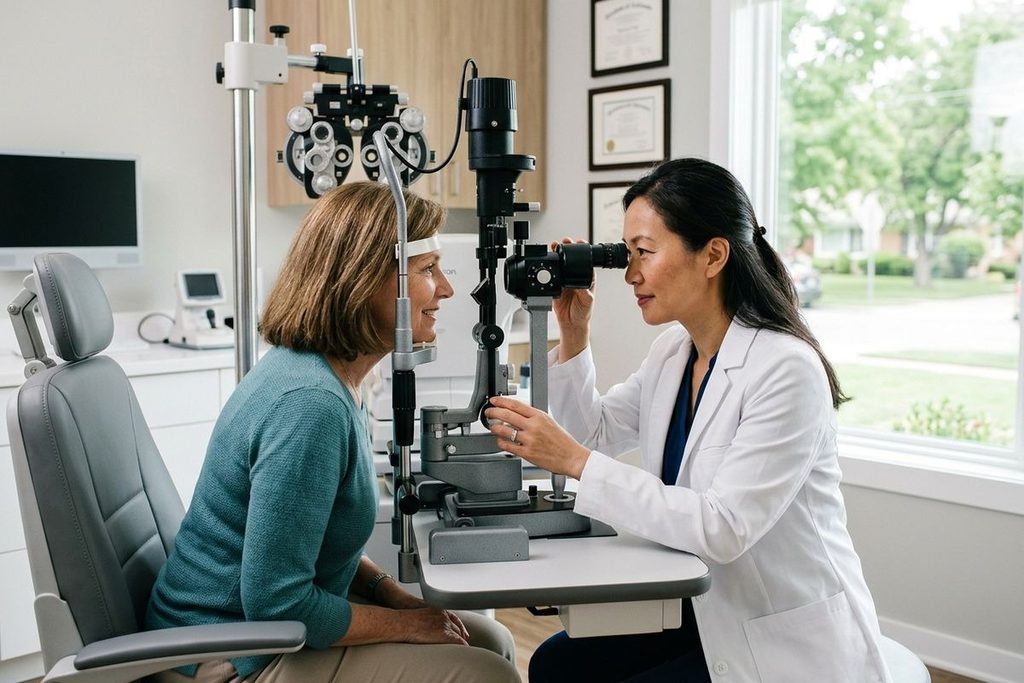
An exam can show what’s making your eyes feel dry in the first place. Your optometrist may measure your tear volume, analyze tear stability, identify areas of irritation in your eyes, confirm inflammation, and evaluate your eyelid oil glands.
Imaging of your eyelid oil glands, called meibography, can show whether they are blocked, healthy or have atrophied from blockages. All of these results help your optometrist decide which treatments make sense for you.
Professional Treatments for Lasting Relief
Once your optometrist knows what the cause of your dry eye symptoms is, they can build a treatment plan to address the root of the problem. Many plans combine a few of the options below, with follow-up visits to track your progress and adjust as your eyes respond.
IPL & RF Treatment
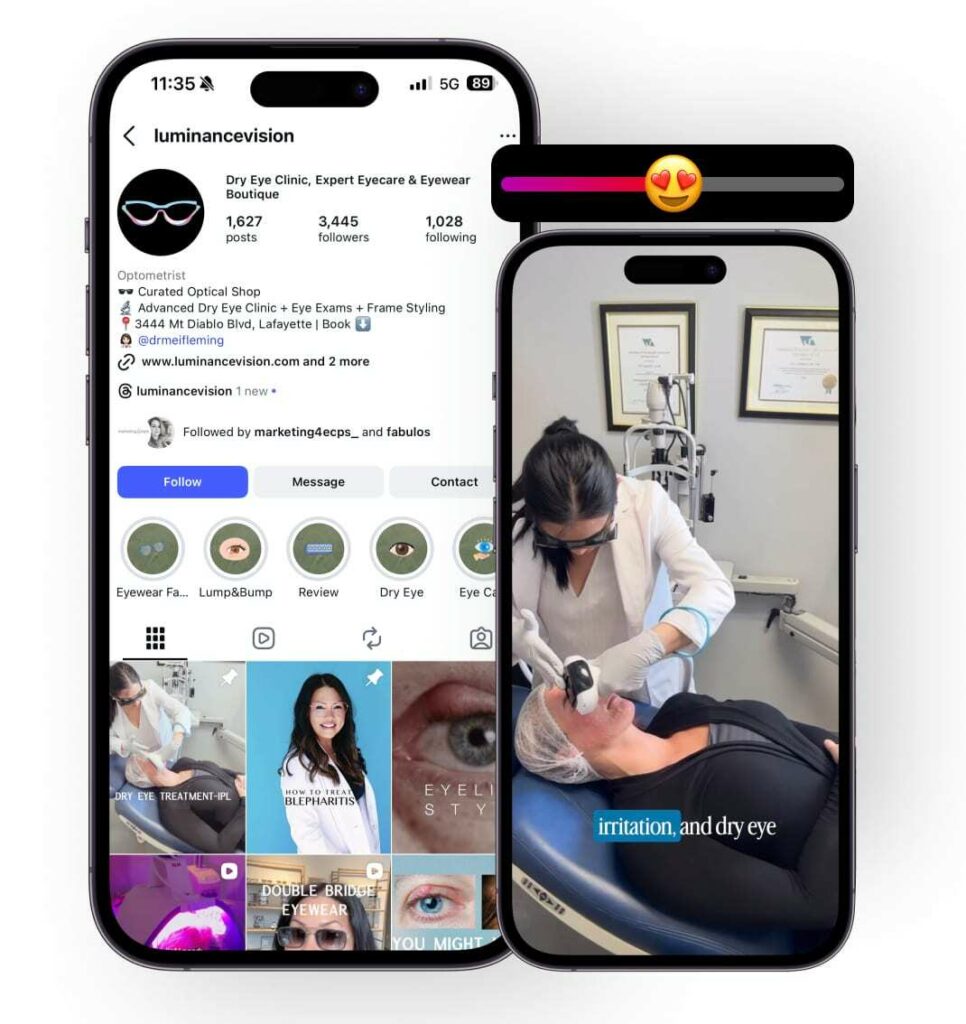
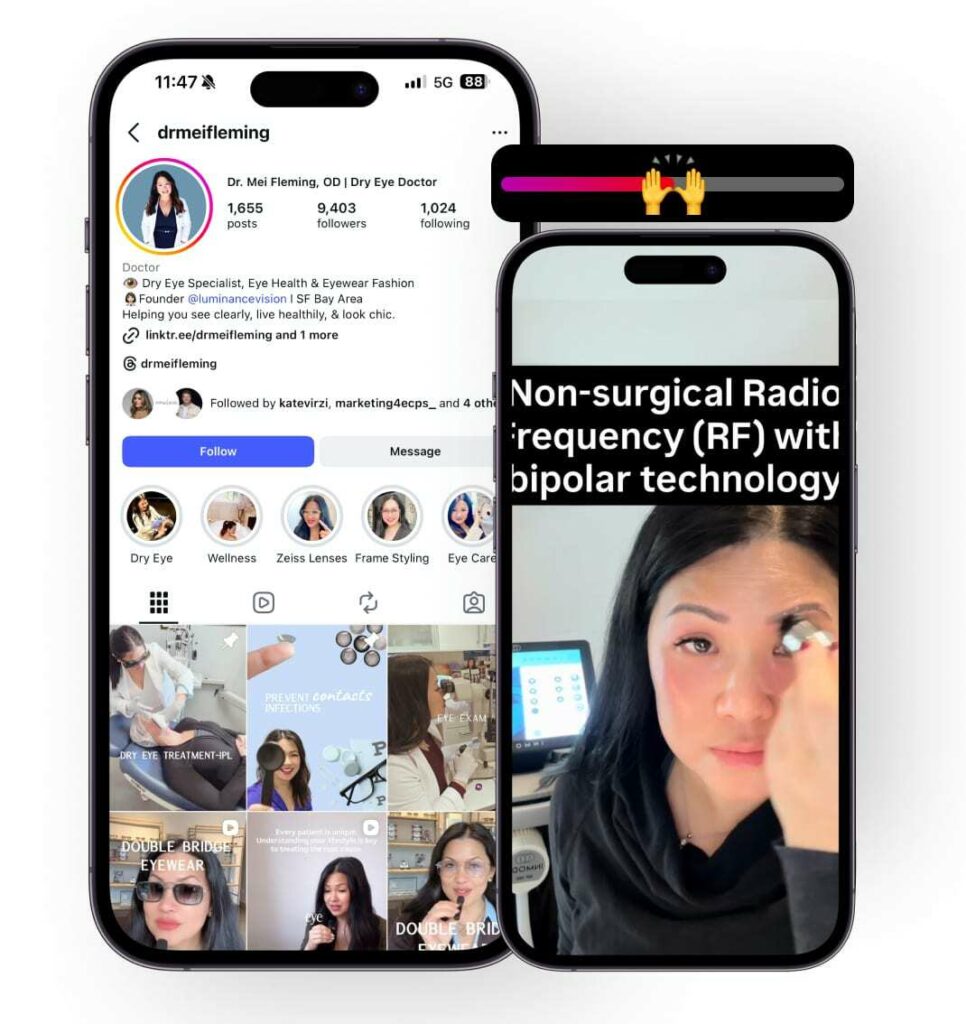
Intense pulsed light (IPL) uses gentle pulses of light on the skin around your eyes to reduce inflammation and loosen blocked oil glands. Radiofrequency (RF) treatment uses gentle heat to unclog the same glands so oil can be released into the eyes. Oftentimes, it’s a combination of both these treatments.
Gland Expression & Eyelid Care
After a heat treatment, your optometrist will gently express thickened oil out of blocked glands using forceps. Eyelid blepharoexfoliation is a professional cleaning of the lash margin to remove plaque bacteria and mites that causes blepharitis and dry eye symptoms. LED Low Light Level therapy also helps to calm eyelid inflammation.
Prescription Eye Drops
Prescription eye drops can be added to support treatments and help reduce inflammation on the surface of your eye. Some take a few weeks or months to work, so must be used as prescribed and usually combined with in-office treatments.
Punctal Plugs
If your eyes don’t make enough tears, your optometrist may suggest punctal plugs. These tiny inserts sit in your tear ducts and can keep your natural tears on the eye longer. Some dissolve over time, and others can stay in place long term.
Home Remedies vs. Professional Treatment for Dry Eye
Mild, occasional dryness often responds well to home care. If your eyes feel comfortable again after a couple of weeks, you may not need anything else.
Chronic dry eye symptoms is a sign of dry eye disease which progresses and worsens over time. When symptoms are persistent, blocked glands or ongoing inflammation are often involved, and a warm compress can’t address these problems.
Get Answers for Dry, Irritated Eyes
Dry eye disease is a progressive disease process which if left untreated becomes very painful and debilitating. At Luminance Vision Optometry, our optometrists are dry eye experts who closely examine your tears, eyelids, and daily routine to identify what’s behind your discomfort.
From there, we’ll work with you on a plan that fits your eyes and your schedule. Book an appointment and tell us what’s been bothering you.