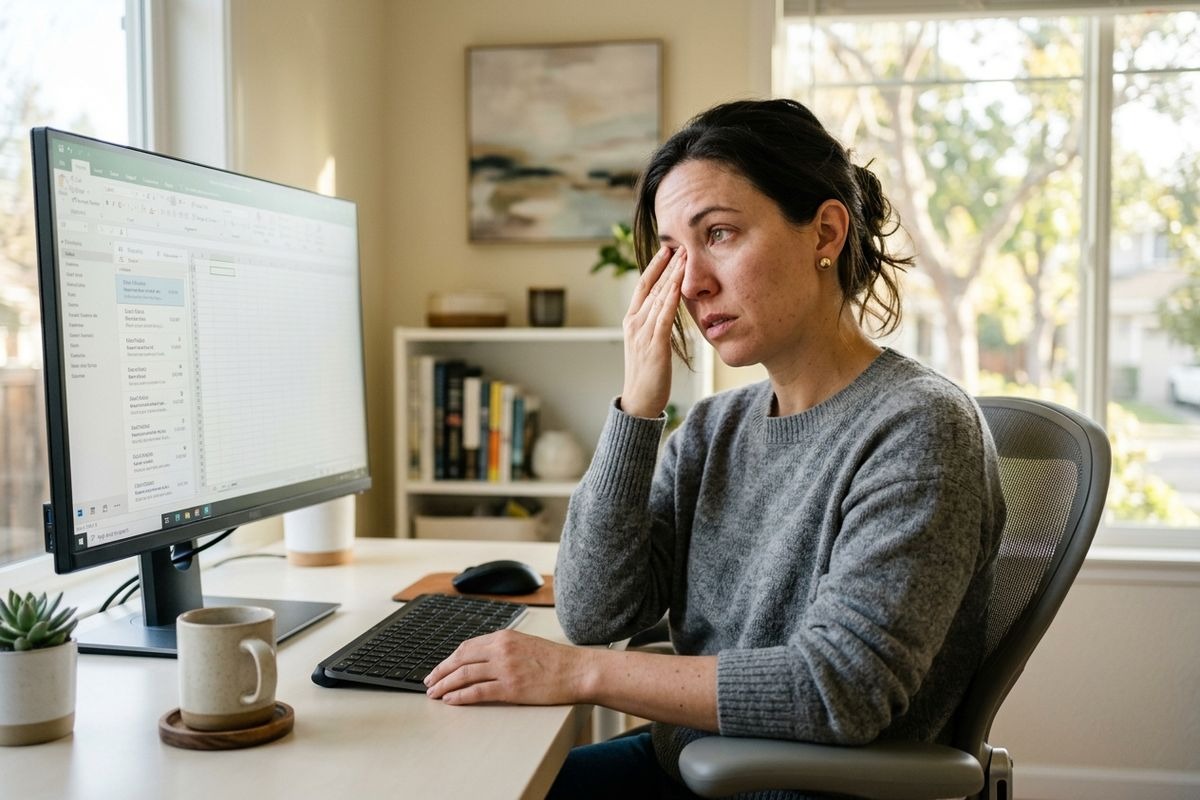
Sudden eye irritation surprises a lot of people. Nothing about your day looks different, yet your eyes start to sting, water, or feel scratchy by early afternoon.
The cause usually traces back to something specific. Dry eyes come on suddenly when your environment, your daily routine, your health, or a new medication upsets the balance of your tear film and leaves too little moisture on the surface of your eyes.
Working out which one is behind the discomfort, or behind vision that blurs and clears as you blink, takes a bit of detective work.
Signs and Symptoms of Dry Eye
Your eyes are good at telling you when something feels off. Dryness that arrives quickly tends to bring a few recognizable signs:
- A gritty feeling, as though sand slipped under your eyelid
- Stinging or burning that comes and goes
- Redness across the whites of your eyes
- Vision that goes blurry and sharpens again after blinking
- Watery eyes despite the irritation
Watery eyes throw people off. When your eyes dry out, they sometimes flood with extra tears to make up for it. Those tears drain away too quickly to help, so the relief rarely lasts.
Environmental Reasons Behind Sudden Dryness
Air quality around you affects your eyes more than you might expect. Wind and low humidity draw moisture right off your eyes’ surface.
It’s not just outdoor air you need to watch out for. Air conditioning in summer and forced-air heating in winter both strip a room of humidity within hours.
Smoke, dust, pollen, and cleaning fumes add another layer of irritation. Point your car vents toward your feet instead of your face, and crack a window when you are scrubbing anything with a strong smell.
Habits That Dry Your Eyes Out
How you spend your day shapes how your eyes feel. Long hours at a screen mean you blink far less than usual, so your tears evaporate before they can coat your eyes. A few other habits contribute:
- Wearing contact lenses longer than they were designed for
- Skipping water through a busy workday and becoming dehydrated
- Sleeping with a fan aimed at your face
- Rubbing your eyes when they itch, which irritates the surface further
A tall glass of water and a few screen breaks can make a real difference by the end of the day.
Health and Body Changes That Affect Your Tears
Your tears respond to what happens inside your body. Hormonal shifts during menopause commonly change tear production, which is why dryness can appear seemingly overnight for those in their 40s and 50s.
Diabetes can damage the nerves that signal your eyes to produce tears. Autoimmune conditions such as Sjögren syndrome and rheumatoid arthritis go after the glands that keep your eyes moist.
Bring it up at your next appointment if the dryness sticks around alongside dry mouth, joint pain, or unusual fatigue.
How Medications and Diet Affect Your Eyes
Plenty of common medicines list dry eyes in the fine print. Antihistamines, decongestants, beta blockers, diuretics, and some antidepressants all reduce tear production.
Talk with your prescribing physician before you make any changes. A timing adjustment or an alternative medication often solves it.
Diet counts as well. Low vitamin A affects tear film health, and omega-3 fatty acids from fish and flaxseed support the oil layer that keeps tears from evaporating too quickly.
What Can Be Mistaken for Dry Eye
Not every case of irritation is truly dry eye. A few other issues feel remarkably similar:
- Seasonal allergies, which bring itching along with the redness and watering
- Conjunctivitis and other minor infections
- Blepharitis, inflammation along the lash line that clogs the oil glands in your lids
An optometrist can tell these conditions apart and point you toward the right kind of relief instead of guesswork.
Simple Ways to Feel Better at Home
Start with a humidifier in the room where you spend the most time. Added moisture in the air helps your tears stay put longer.
Try the 20-20-20 rule while you work. Every 20 minutes, look at something 20 feet away for 20 seconds.
Keep preservative-free artificial tears within reach and reach for them before your eyes start to complain. Wear wraparound sunglasses outdoors on windy days. A warm compress held over closed lids for 5 minutes can loosen the oil sitting in your eyelid glands.
When Home Care Is Not Enough
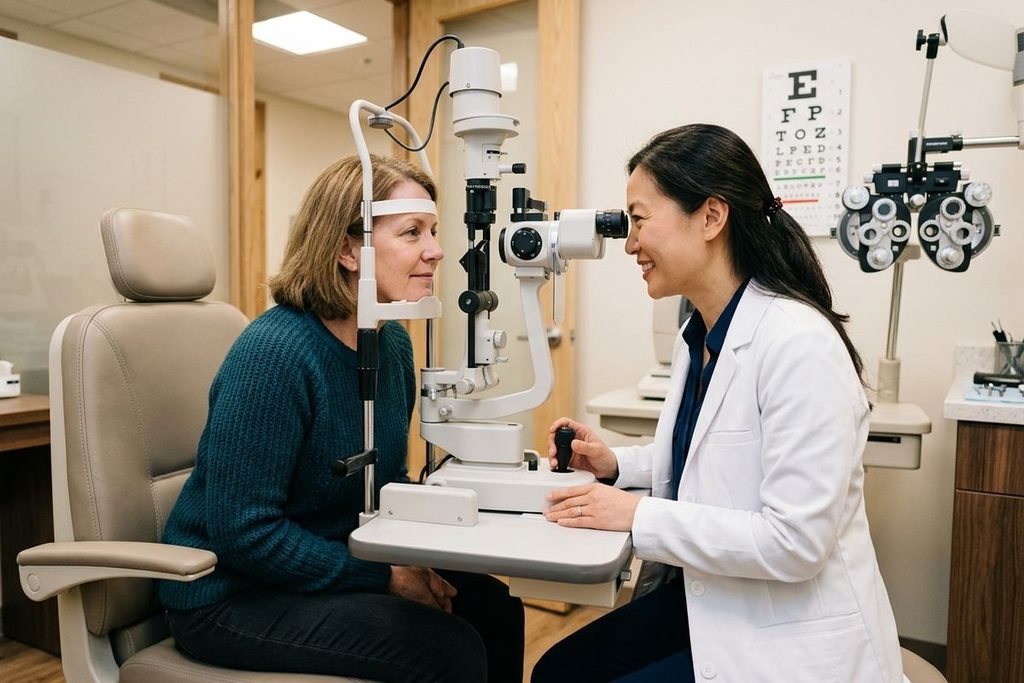
Home remedies handle mild dryness well. Symptoms that stick around past a week or worsen quickly call for a professional look. A comprehensive exam can find the source of your dryness instead of just treating the symptoms.
From there, the team can suggest prescription drops or in-office treatments matched to your needs. Every plan is personalized, because your eyes and your routine are unique to you.
Give Your Eyes the Attention They’re Asking For
Sudden dryness usually points to something you can identify and address, whether that is the air in your office or a medication you started last month.
Book an appointment with Luminance Vision Optometry, and let one of our optometrists identify what is driving your discomfort. Your eyes have been asking for help, so schedule your dry eye evaluation today!