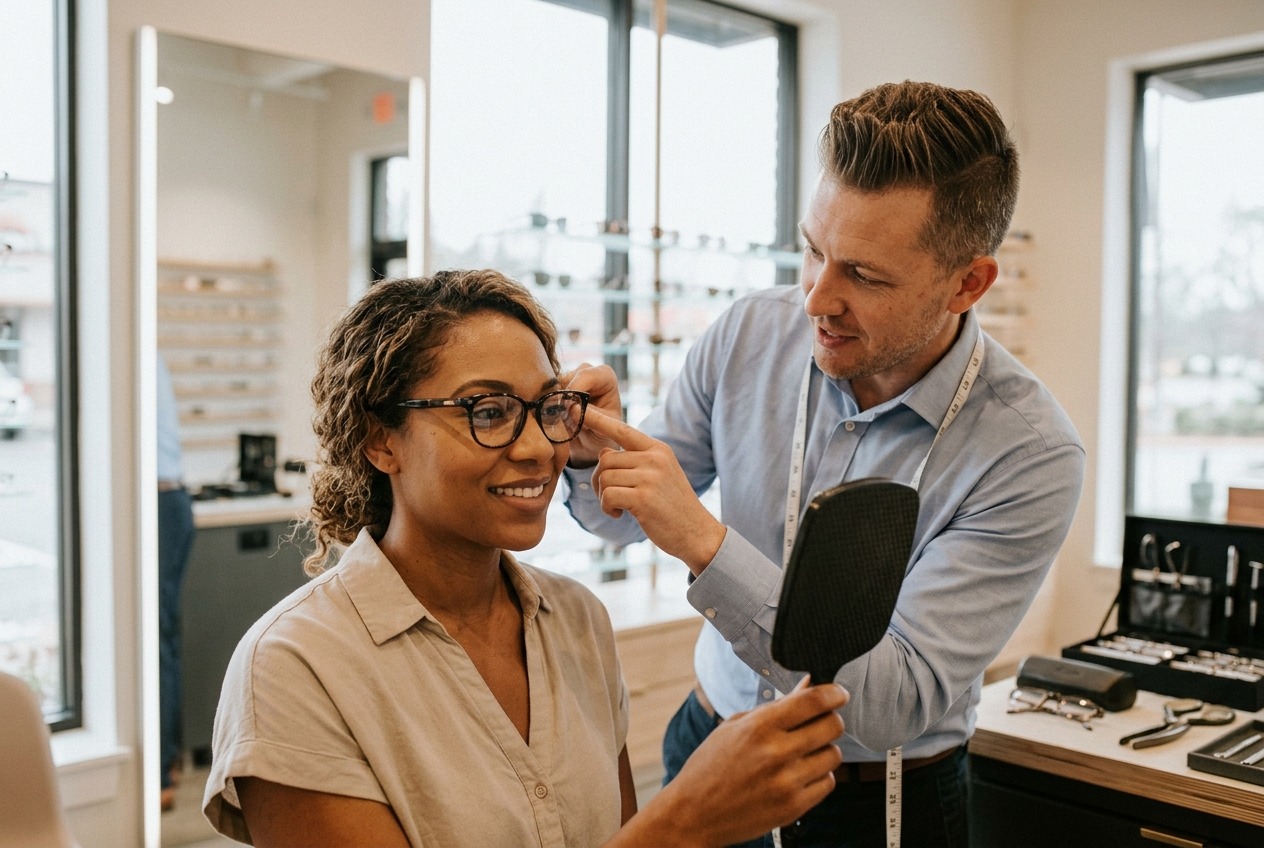
You put on your glasses every morning, but have you ever wondered if they’re actually fitting your face correctly? Maybe they slide down your nose during important meetings, or you get headaches after wearing them all day. When you experience these problems, you need guidance from professionals, like our team at Luminance Vision.
Your eyeglasses should sit comfortably on your nose without sliding, rest gently on your ears without pressure, and position your pupils in the center of each lens for clear vision. When your frames fit properly, you may even forget you’re even wearing them. Finding the right fit often requires professional eyewear guidance to help with both comfort and vision correction.
Why Proper Eyeglass Fit Matters for Your Vision and Comfort
How well your glasses fit affects both how clearly you see and how comfortable you feel throughout the day. When frames sit in the right position, your prescription lenses should work exactly as intended.
Poorly fitted glasses can cause eye strain, blurred vision, and neck pain as you constantly adjust your head position to see clearly. You might find yourself pushing your glasses up dozens of times each day or dealing with uncomfortable pressure points. These symptoms can worsen over time and may even contribute to computer vision syndrome if you spend long hours looking at screens.
Key Areas Where Your Glasses Should Fit Correctly
Bridge and Nose Support
Your glasses should rest comfortably on your nose without creating red marks or sliding down when you look down. The bridge distributes the weight of your frames evenly across your nose.
If you notice indentations on your nose after removing your glasses, the bridge might be too narrow or heavy for your facial structure.
Temple Arms and Ear Positioning
The temple arms should follow the natural curve behind your ears without squeezing or creating pressure. You shouldn’t feel any pinching or tightness around your temples.
Properly fitted temple arms can keep your glasses stable during daily activities such as exercising, bending over, or quickly turning your head.
Lens Position and Your Eyes
Your pupils should typically align with the optical center of each lens for the clearest possible vision. When the lenses sit too high or low, you may be looking through the wrong part of your prescription.
This misalignment can cause dizziness, eye fatigue, and difficulty focusing on objects at different distances. For those with progressive lenses or presbyopia, proper positioning becomes even more important for clear vision at all distances.
How to Tell if Your Glasses Are Too Big or Too Small
Your glasses give you clear signals when they don’t fit properly.
Pay attention to how your glasses feel after wearing them for several hours. Discomfort often develops gradually throughout the day. If you experience ongoing issues, professional eye care services can identify and resolve fitting problems.
Signs Your Frames Are Too Large
- Glasses slide down your nose constantly
- Lenses extend beyond your face width
- You see lens edges in your peripheral vision
- Frames slip when you look down or move your head
Signs Your Frames Are Too Small
- Pressure marks on your temples or nose
- Headaches after wearing glasses
- Frames pinch behind your ears
- Limited field of vision through the lenses
Choose the Right Frame Size for Your Face Shape
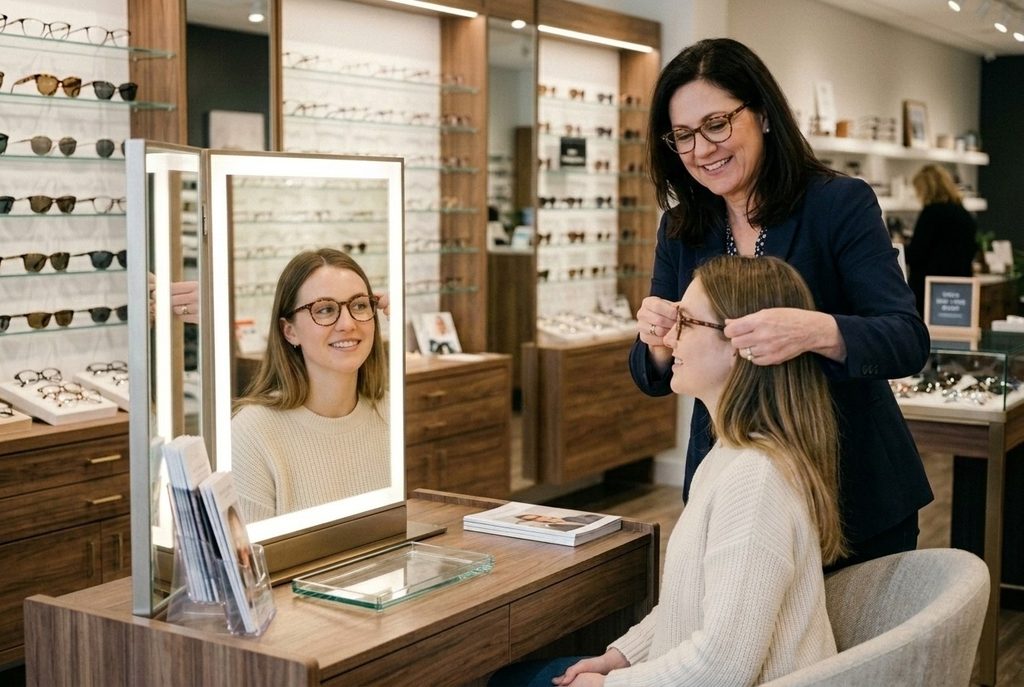
Your face shape and measurements determine which frame styles look natural and feel comfortable. The right frame helps enhance your features while providing clear vision.
Frame width should match your face width so your glasses don’t overwhelm your features or appear too small. The bridge width affects how your glasses sit on your nose, while temple length helps them stay secure behind your ears.
Face Shape Considerations
- Round faces benefit from angular frame shapes that add definition
- Square faces are complemented with softer, rounded frames that balance strong jawlines
- Oval faces can wear most frame styles comfortably
- Heart-shaped faces pair well with bottom-heavy frames that balance a wider forehead
Professional Frame Fitting Makes the Difference
A professional fitting helps your glasses work properly with your prescription and lifestyle needs. Our team can make precise adjustments to temple arms, nose pads, and frame angles that you can’t achieve at home.
This personalized approach can prevent common fitting problems such as slipping, pressure points, or blurred vision caused by misaligned lenses. Every eye exam ends with a personalized frame styling. Our team knows how to incorporate your style into your glasses while helping you achieve the clearest possible vision.
Professional fitting becomes even more important if you have specific vision needs, like progressive lenses, prisms, or prescriptions that require precise positioning. During a comprehensive eye exam, your eye doctor can identify unique requirements that affect frame selection and fitting.
See Life Clearly and Comfortably
Our team at Luminance Vision can provide personalized care that addresses your unique vision and style needs. Schedule your comprehensive eye exam today to experience the difference proper fitting makes for your comfort and clear vision.